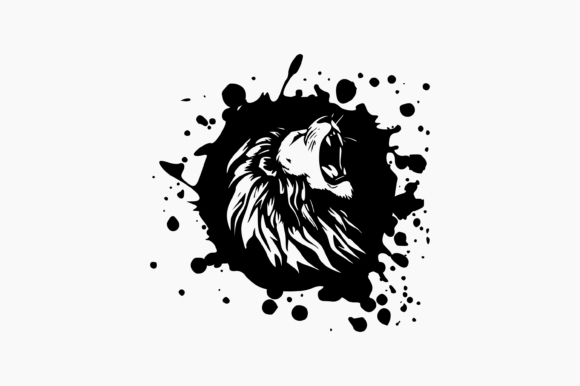
Lion Roar Splat Ink: Graphics for Crafts-Driven Branding
As a brand designer who’s developed visual identities for over 40 local businesses—from artisanal candle studios in Portland to family-run kombucha breweries in Austin—I recently evaluated Lion Roar Splat Ink for a real-world project: rebranding a small-batch lavender honey shop in Asheville. My goal wasn’t just aesthetic appeal—it was functional versatility across packaging, labels, social media, and in-store signage. Here’s what stood out.
A Bold, Playful Graphic Design Asset with Clear Brand Personality
First impression? Lion Roar Splat Ink delivers energetic contrast—think dynamic ink-splash motion paired with the confident silhouette of a lion’s roar. It reads as bold but not aggressive, spirited but not chaotic. For local businesses rooted in authenticity—like handmade soap makers, children’s toy boutiques, or seasonal farmers’ market vendors—it suggests approachable strength and creative confidence. It leans modern and expressive rather than rustic or minimalist, making it ideal for brands that want warmth *and* presence. It doesn’t feel premium in a luxury sense (no gold foil or serif elegance), but it *does* feel intentional, hand-crafted, and commercially viable.
Where Lion Roar Splat Ink Strengthens Real Small Business Branding
This graphic design asset shines where local business branding needs instant recognition and emotional resonance:
- Product labels & packaging accents: Used as a corner flourish on honey jar labels or as a repeating border on gift box wraps, it adds movement without overwhelming product photography or ingredient lists.
- Stickers & hang tags: Its high-contrast SVG and PNG files scale cleanly down to 1.5” diameter—perfect for branded stickers on reusable shopping bags or kraft paper hang tags for handmade candles.
- Social media graphics: As a hero element behind short-form video captions or layered subtly under “New Seasonal Flavor” announcements, it boosts visual hierarchy and brand recall across Instagram Stories and Facebook posts.
- Printable marketing visuals: On thank-you cards, seasonal flyers, or café menu headers, it elevates DIY print jobs—especially when paired with warm neutrals or earthy tones common among food and skincare brands.
- Product mockups: Layered over realistic mug, tote bag, or soap bar mockups, it tests how well the design translates across physical formats before committing to production.
When applied consistently, Lion Roar Splat Ink supports stronger first impressions at craft fairs, improves shelf appeal in boutique retail settings, and builds cohesive visual rhythm across digital and print touchpoints—key drivers of customer trust for small business branding.
Smart Usage Boundaries for Local Business Contexts
Not every application benefits equally. Use Lion Roar Splat Ink thoughtfully:
- Avoid formal corporate branding: Its expressive energy clashes with law firms, accounting services, or medical practices seeking calm authority.
- Limit use on very small labels: Below 0.75”, fine ink-splash details may blur—always preview at actual print size.
- Don’t layer over dense text or legal disclaimers: Its visual weight competes with critical information like ingredient lists or FDA-mandated labeling.
- Steer clear of low-contrast backgrounds: On light gray or beige packaging, test opacity and edge sharpness—PNG transparency must hold up.
- Reconsider for luxury minimalist brands: If your identity relies on whitespace and restrained typography (e.g., a high-end skincare line), this graphic design asset may dilute your positioning.
Practical Brand Designer Notes for Real Projects
Before deploying Lion Roar Splat Ink in client work or your own small business branding, run these checks:
- Test it on real packaging mockups—not just screen previews—to assess scale, balance, and color interaction.
- Convert to grayscale to verify legibility and tonal range if printing in black-and-white (e.g., for simple price tags or bakery chalkboard graphics).
- Preview alongside your brand’s core fonts: Does it harmonize with a friendly script (for a florist), a clean sans serif (for a coffee shop), or a bold display font (for a festival pop-up)?
- Verify SVG editability—can you isolate and recolor individual splash elements to match your palette? This matters for consistent packaging design.
- Confirm commercial license terms: While marketed for unlimited use on stickers, mugs, and apparel, ensure it covers physical product sales, wholesale distribution, and client-facing deliverables.
- Compare against competitor packaging—does it help your product stand out on crowded shelves or market tables?
- Check PNG transparency edges—fuzzy halos ruin professional packaging, especially on dark or metallic substrates.
For handmade businesses and local brand owners, Lion Roar Splat Ink isn’t just clipart—it’s a flexible, scalable component of your visual language. When aligned with thoughtful typography, strategic color, and authentic storytelling, it becomes part of a recognizable, trustworthy brand identity—not decoration, but communication.
Final Thought: A Tool That Earns Its Place
In an era where small business branding competes for attention in seconds, assets like Lion Roar Splat Ink earn their value by doing more than looking good. They reinforce personality, guide the eye, support consistency—and most importantly, they translate seamlessly from digital mockup to physical label to social feed. For creatives building real local business brands—whether launching a new candle line, redesigning a food label, or refreshing a boutique’s seasonal campaign—this is a graphics resource that works *with* your strategy, not just beside it. Just remember: great design assets amplify intention. Use Lion Roar Splat Ink with purpose, test relentlessly, and let it serve your story—not the other way around.