Halloween House Coffee Tumbler Mug
A Designer’s First Glance: Spooky, Sweet, and Surprisingly Versatile
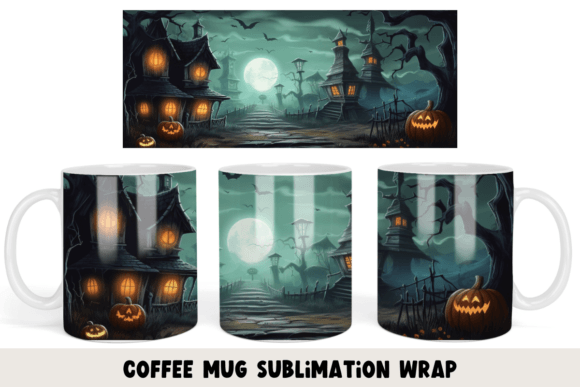
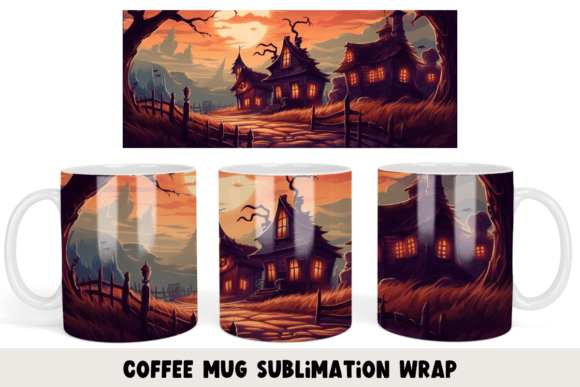
When I opened the Halloween House Coffee Tumbler Mug files, my first thought wasn’t “perfect for mugs”—it was “this could shine on a linen tea towel or a baby onesie.” The illustration has that rare balance: playful enough for kids’ Halloween gear, detailed enough for adult boutique appeal, and clean enough to translate well into embroidery. It’s not overly busy—no tiny bats flitting in negative space or micro-lettering—but it carries clear visual storytelling: a crooked house with glowing windows, a friendly ghost peeking from the chimney, and stylized pumpkins framing the base. The proportions (8.5 × 3.5 inches for 11 oz, 9 × 4 inches for 15 oz) suggest intentional scaling—not just stretched art, but thoughtfully adjusted layouts. As a designer who’s stitched hundreds of holiday motifs, I immediately saw its potential beyond drinkware.
Where This Design Actually Lives Well
- Embroidered tote bags: I tested a scaled-down version (7.5″ wide) on a medium-weight canvas tote—it read clearly at arm’s length, held up beautifully after washing, and gave the bag instant seasonal charm without looking like a mass-produced sticker.
- Sweatshirt front panels: Centered above the pocket on a charcoal crewneck, the house motif added warmth and personality. Its horizontal orientation avoids awkward cropping on standard sweatshirt chest areas.
- Baby items and nursery decor: On a soft cotton burp cloth, the simplified shapes and generous spacing between elements meant no thread nesting or puckering—even with lightweight tear-away stabilizer.
- Embroidered patches: When digitized with clean satin-stitched outlines and balanced fill stitch density, this design holds crisp edges when heat-applied to denim jackets or backpacks.
- Holiday gifts and small shop merchandise: As part of a curated Etsy listing—say, a “Spooky Sip & Stitch” bundle with matching tea towels and embroidered mugs—the Halloween House Coffee Tumbler Mug becomes a cohesive anchor. Customers recognize the theme instantly, and it scales reliably across product types.
Where to Proceed With Care
This isn’t a one-size-fits-all embroidery file—and that’s honest design judgment, not a flaw. The house silhouette works best on stable, medium-to-heavy fabrics. On thin tees or stretchy knits, the wider horizontal span (especially the 9 × 4 inch version) can distort if stabilizer isn’t layered thoughtfully. I’d avoid using it full-size on curved surfaces like baseball caps unless you’re willing to split and reposition the design manually. Also, while the PNG resolution is high (300 DPI), remember: this is a graphic template, not an embroidery file. You’ll need to digitize it—or work with a digitizer—who understands how to interpret those smooth curves and subtle shadows as stitch paths. Tiny details like the ghost’s wispy tail or window highlights may require strategic running stitch accents or reduced fill density to prevent stiffness.
How It Shapes Perception—Before and After Stitching
A well-executed Halloween House Coffee Tumbler Mug elevates perceived value fast. On a handmade kitchen towel, it reads as thoughtful, not generic. On a personalized gift, it signals care—not just “I bought a design,” but “I chose something that fits your vibe.” That matters for Etsy sellers and craft fair vendors: customers scroll past cluttered, low-contrast designs in under two seconds. This one lands because it’s legible, thematically focused, and visually grounded. It also supports brand consistency—if your shop leans into cozy, nostalgic, or storybook-style Halloween, this motif reinforces that voice across apparel, home goods, and digital mockups.
Practical Notes Every Embroidery Designer Should Run Through
- Test on scrap fabric first—especially if stitching on textured linen or dark-colored cotton. What looks sharp on screen may blur slightly with thread build-up.
- Check thread color contrast. The house’s shadowed side and pumpkin stems rely on tonal variation—choose thread shades that preserve depth without muddying the shape.
- Review stitch density. High-fill areas (like the roof or main house body) benefit from underlay stitches on unstable fabrics.
- Confirm hoop size compatibility. At nearly 9 inches wide, the larger version needs a 10″ × 6″ hoop minimum—or creative repositioning.
- Inspect small details. The ghost’s outline and window frames are delicate; verify they digitize cleanly at your target size.
- Test black-and-white mockups. Does the composition hold up without color cues? Yes—it does, thanks to strong silhouette and spacing.
- Compare light vs. dark backgrounds. On black fabric, use matte thread; on cream, consider ecru or warm gray for subtlety.
- Use proper stabilizer. Medium cutaway for knits, tear-away for stable wovens, and optional topping for napped fabrics like terry cloth.
- Verify licensing before selling finished items. Since this is a Graphics product, confirm whether commercial use is included—especially if bundling with physical products or offering as part of a custom embroidery service.
Final Thought: A Thoughtful Tool, Not Just a Trend
The Halloween House Coffee Tumbler Mug doesn’t scream “viral trend.” It whispers “cozy autumn morning,” “handmade care,” and “small business authenticity.” That’s why it works so well for real embroidery projects—not because it’s flashy, but because it’s considered. Whether you’re prepping for a holiday craft fair, building an Etsy collection, or designing a limited-run boutique line, this graphic template gives you room to stitch with intention. It’s not just another Halloween clipart download. It’s a starting point—with personality, proportion, and quiet confidence—that earns its place on mugs, totes, towels, and beyond.