Easter SVG My 1st Easter
A Designer’s First Look: Charm, Clarity, and Craftsmanship
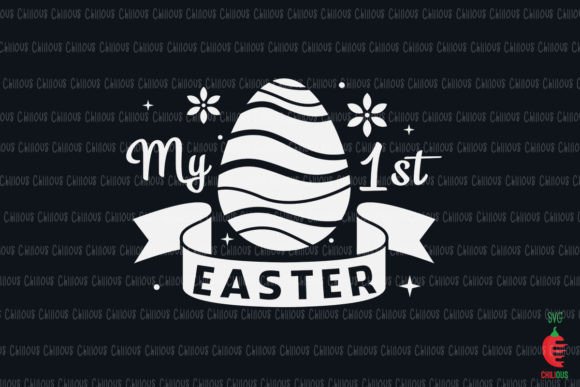
When I opened the Easter SVG My 1st Easter file for the first time—prepping for a client’s custom baby gift line—I paused. Not because it was flashy, but because it felt quietly intentional. The composition centers on a soft, rounded egg shape cradling delicate lettering and subtle floral accents—no overwrought bunnies or cartoonish eggs. It reads as gentle, tender, and handmade—not mass-produced. That tone matters deeply when you’re stitching something meant to mark a milestone: a newborn’s first Easter, a toddler’s debut holiday memory, or a boutique’s signature nursery collection. As a designer who tests dozens of embroidery files each month, I immediately saw where Easter SVG My 1st Easter fits: not as background filler, but as a focal point with emotional weight.
Real-World Stitching: From Tote Bag to Tea Towel
Last week, I stitched Easter SVG My 1st Easter onto three very different substrates: a heavyweight cotton tote bag, a lightweight organic cotton onesie, and a linen-blend kitchen towel. On the tote, the design held beautifully—the balanced proportions kept the egg from looking top-heavy, and the lettering remained legible even at 3.5 inches wide. On the onesie, I used a lightweight tear-away stabilizer and reduced stitch density slightly; the satin stitch edges stayed crisp, and the small “1st” didn’t blur or pucker. The tea towel was the true test: linen’s slight irregularity can swallow fine details, but the clean vector lines in the SVG held up. No stray threads, no skipped stitches—even across the subtle stem detail on the floral accent. That consistency tells me this is a well-constructed machine embroidery design, not just a pretty graphic.
Where It Shines—and Where to Pause
Easter SVG My 1st Easter excels in projects that rely on warmth and recognition: embroidered patches for Easter baskets, sweatshirt embroidery for church preschools, pillow covers for nursery decor, or personalized gifts sold by Etsy sellers and small shop owners. Its moderate scale (neither too tiny nor overly bold) makes it versatile across apparel and home goods. But be mindful: the lowercase “i” in “My” and the fine serif in “Easter” are charming—but they’ll vanish on stretchy fabric without proper stabilization, or on dark fabric if your thread contrast isn’t intentional. I wouldn’t push it below 2.75 inches wide on caps or curved surfaces—those gentle curves flatten unpredictably in tight hoop sizes. And while it works beautifully as an applique design or standalone fill-stitch piece, avoid layering it over textured fabrics like terry cloth or heavy corduroy unless you’ve tested stitch density and underlay first.
Design Integrity Meets Customer Trust
What customers notice—and what builds trust—is how clearly the finished product communicates care. When Easter SVG My 1st Easter stitches cleanly, it reads as professional, thoughtful, and cohesive. That perception lifts perceived value: a $28 embroidered baby blanket feels heirloom-worthy; a $16 tote bag becomes a keepsake. For craft businesses and digital product sellers, that clarity also supports branding—whether you’re using it in printable mockups for your Etsy listings or stitching it consistently across seasonal collections. It doesn’t shout. It invites. And in holiday embroidery, especially, that quiet confidence resonates more than visual noise.
Practical Notes Every Embroidery Designer Should Check
- Test before committing: Run a sample on scrap fabric matching your final substrate—especially for baby clothes or items requiring frequent washing.
- Review thread colors early: The design’s charm relies on soft contrast—try ecru thread on oatmeal linen, or pale mint on ivory cotton. Avoid high-contrast combos unless that’s your brand voice.
- Confirm hoop size and stitch density: While the file includes SVG, PNG, DXF, and EPS formats—ideal for digitizing or adapting—the actual stitch count and recommended hoop size aren’t listed. Always verify those before production.
- Inspect small details: Zoom into the “1st” superscript and floral stem in your embroidery software. Are anchor points clean? Is there excessive running stitch between elements?
- Mock it both ways: Preview the design in black-and-white mockups and on light/dark fabric swatches. Does the hierarchy hold? Does the egg shape still read as central?
- Stabilizer strategy matters: Use cut-away for knits, tear-away for stable wovens, and water-soluble for towels or delicate linens.
- Licensing check: Since this is a digital embroidery file sold as a Graphics asset, confirm whether commercial use is permitted for finished products—or if redistribution of the design files themselves is restricted.
Final Thought: A Design That Supports Your Intent
Easter SVG My 1st Easter won’t solve every embroidery challenge—but it does something rarer. It supports intention. Whether you’re a hobbyist stitching a one-off gift, an Etsy seller building a seasonal catalog, or a small shop owner curating meaningful Crafts inventory, this design carries its purpose without strain. It’s not trying to be everything. It’s simply, thoughtfully, *enough*. And in real-world embroidery—where time, thread, fabric, and customer expectations all converge—that kind of restraint is the mark of good design.